Tile Versus Vinyl Rental Floors That Hold Up
By JT Express Solutions ·
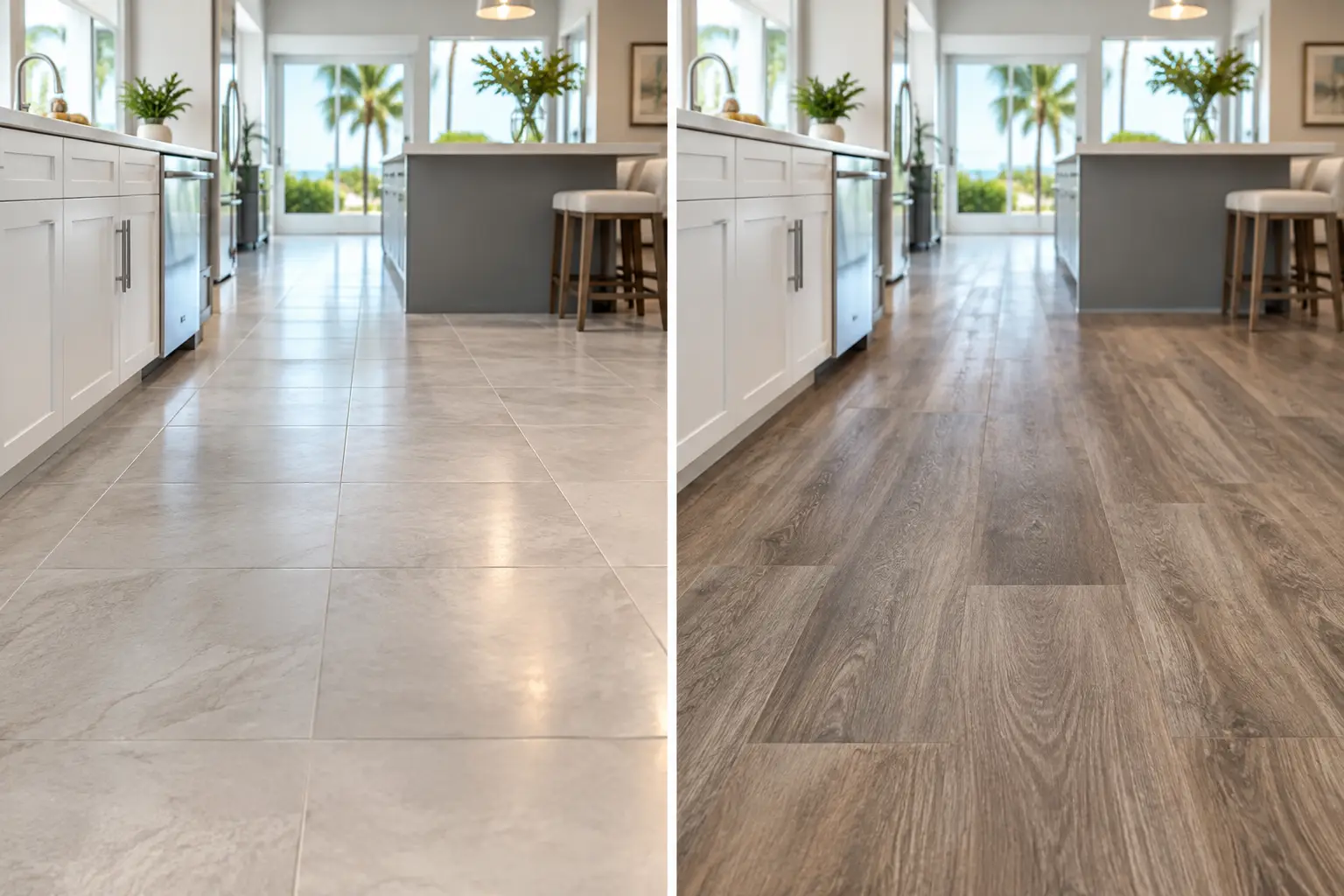
A rental floor can look excellent at move-in and become the most expensive line item at turnover. When comparing tile versus vinyl rental floors, Miami landlords and property managers need to look beyond color, price per square foot, and showroom samples. Moisture, concrete slabs, tenant wear, building rules, repair access, and the next tenant’s expectations all affect the smarter choice.
For many South Florida rentals, tile delivers the long-term, high-end finish people expect. Vinyl can be the faster, more flexible answer for the right unit. The best material depends on where the floor is going, how the property is used, and whether the priority is premium presentation, quick turnover, or easier future repairs.
Tile Versus Vinyl Rental Floors in Miami
Tile is usually the stronger choice when a property needs a durable, permanent-looking surface with real resistance to water, scratches, and heavy traffic. Porcelain tile is especially well suited to Miami-Dade rentals because it handles humidity, wet shoes, kitchen spills, and bathroom moisture without swelling or staining. It also gives a renovated apartment, condo, or single-family rental a clean foundation for a more polished interior.
Vinyl flooring, particularly luxury vinyl plank or luxury vinyl tile, has earned its place in rental improvements for different reasons. It is quieter underfoot, generally faster to install, and more forgiving when a concrete slab has minor variation. It can also create a warm wood-look finish without the maintenance concerns of natural wood in a humid climate.
Neither material is automatically better. Tile often wins on service life and water exposure. Vinyl often wins when speed, sound control, and a lower-disruption installation matter most. The wrong choice is usually not about the product itself. It is about putting a good product in the wrong setting.
Where Tile Makes the Better Rental Investment
Porcelain tile is hard to beat in entry areas, kitchens, bathrooms, laundry rooms, and ground-floor units where water exposure is a regular possibility. Properly installed tile does not absorb normal household moisture, and it gives tenants a surface that is easy to sweep, mop, and keep looking presentable.
For an investor renovating a unit for higher rents or a stronger resale position, large-format porcelain can create the upscale, continuous look buyers and renters notice immediately. A neutral matte finish can make a compact condo feel more open, while a stone-look tile supports spa-like bathroom finishes without requiring delicate natural stone care.
Tile also holds up well against the kind of rental wear that damages softer floors: chair legs dragged across a dining area, rolling luggage, pet traffic, sandy shoes, and frequent furniture moves. A quality porcelain tile may outlast several paint cycles and multiple tenants. That durability can make its higher installation cost easier to justify over a long ownership period.
The trade-off is repair complexity. If a tile cracks from impact or slab movement, replacing it requires careful removal and a matching replacement tile. Keeping a few extra boxes from the original lot is a simple but valuable turnover decision. Without them, a small repair can turn into a larger flooring discussion.
Grout needs consideration, too. Light grout may look crisp at handover but can show dirt in high-traffic rentals. A practical grout color and a quality grout installation help preserve the finished look. In wet areas, the installation details matter as much as the tile selection. A beautiful floor does not compensate for poor substrate preparation or inadequate waterproofing where waterproofing is required.
When Vinyl Is the Practical Choice
Vinyl is often a strong fit for bedrooms, living areas, offices, and rental units where minimizing downtime is a major concern. A well-selected luxury vinyl plank can provide a clean, contemporary wood appearance while feeling warmer and quieter than tile. That matters in condos, where footfall noise can become a tenant complaint.
Unlike ceramic or porcelain, vinyl has some flexibility. This can make it more tolerant of minor imperfections in an existing slab, though it is not a shortcut around proper preparation. Uneven concrete, old adhesive residue, moisture vapor, and damaged patches still need to be evaluated before installation. A floor that looks flat from the doorway can have enough variation to telegraph through vinyl planks or cause joints to separate over time.
Vinyl is also useful for targeted turnover work. If a bedroom carpet is worn or a living room needs a refresh between tenants, vinyl can often improve the space without expanding the project into a full-unit tile removal. That flexibility is valuable when a landlord needs an attractive result while controlling vacancy time and scope.
Not all vinyl is equal. Thin, low-cost material may dent, tear, fade, or show subfloor imperfections sooner than expected. Rental owners should focus on a commercial-appropriate wear layer, a finish that hides small scratches, and a color that will still coordinate if one section needs replacement later. Extremely textured or highly patterned options can make isolated repairs more noticeable.
Moisture Is the Deciding Factor More Often Than Style
Miami humidity is not the same as a plumbing leak, but both affect flooring decisions. Concrete slabs can carry moisture vapor, especially in older buildings and ground-level spaces. Before vinyl installation, moisture conditions and slab preparation need to be addressed according to the flooring system being used. Ignoring this step can lead to adhesive issues, curling edges, odor, or visible floor failure.
Tile is more comfortable around surface water, but it is not a cure for an active moisture problem below or behind the floor. Water can travel through grout joints, around perimeter gaps, and through damaged areas. Bathrooms, laundry connections, exterior doors, and kitchen plumbing deserve a closer look before new flooring is installed.
For storm-season preparation, flooring is only one part of protecting a rental. The practical goal is to identify water entry points, repair damaged drywall or baseboards, and avoid covering up signs of prior moisture. Installing new vinyl or tile over an unresolved issue only delays the repair and increases the eventual cost.
Condo Rules Can Change the Best Material Choice
Many Miami-area condos require association approval before flooring work begins. The rules may cover permitted work hours, elevator reservations, insurance documentation, debris removal, underlayment, and sound transmission ratings. Some buildings restrict hard surfaces in upper-floor units unless an approved acoustic underlayment is included.
This is where vinyl can become attractive, provided the selected system and underlayment meet the building’s requirements. Tile can also be approved, but its weight, demolition noise, and installation process may require more coordination. A property manager should review the association package before materials are ordered, not after a crew is scheduled.
In Miami-Dade, full remodeling projects may also involve permits or building requirements depending on the project scope and related work. A straightforward flooring replacement is not the same as moving plumbing, altering a bathroom layout, or opening walls. Planning the floor as part of the larger renovation avoids mismatched timelines and unnecessary rework.
Think About Turnovers Before Picking a Color
Rental flooring should be chosen for its second and third tenant, not just for listing photos. Neutral colors, repeatable materials, and available replacement stock make future turnovers easier. A pale gray floor may look striking in a vacant unit but reveal every scuff and cleaning mark. Very dark floors can show dust and pet hair just as quickly.
For tile, a mid-tone porcelain with matching trim pieces is often the most dependable path. For vinyl, choose a proven plank or tile format with a realistic pattern variation and enough product available to keep repair stock. In either case, avoid installing new flooring before baseboard repairs, drywall patches, cabinet work, and painting are properly sequenced.
The installation quality will affect tenant satisfaction as much as the material. Loose transitions, hollow-sounding areas, chipped edges, visible height changes, and poorly finished baseboards make an otherwise beautiful rental feel incomplete. Those details matter when a unit is being positioned as a premium home rather than a basic turnover.
Choose the Floor That Supports the Property Plan
Use tile when the rental needs maximum water resistance at the surface, a lasting upscale finish, and strong performance in kitchens, baths, entries, or high-traffic spaces. Use quality vinyl when a quieter feel, faster turnaround, or more flexible room-by-room upgrade better serves the property. In some renovations, the strongest approach is both: tile in wet areas and vinyl in bedrooms and living spaces, coordinated through color and trim.
Before committing, review the slab condition, building requirements, water history, room use, and how long you expect to hold the property. JT Express Solutions can help Miami-Dade owners and managers evaluate those details and build a flooring scope that looks refined at move-in and stays practical when the next turnover arrives. Request an estimate before ordering materials, and make the floor choice part of a well-organized renovation plan.