Porcelain Tile Installation Miami Done Right
By JT Express Solutions ·
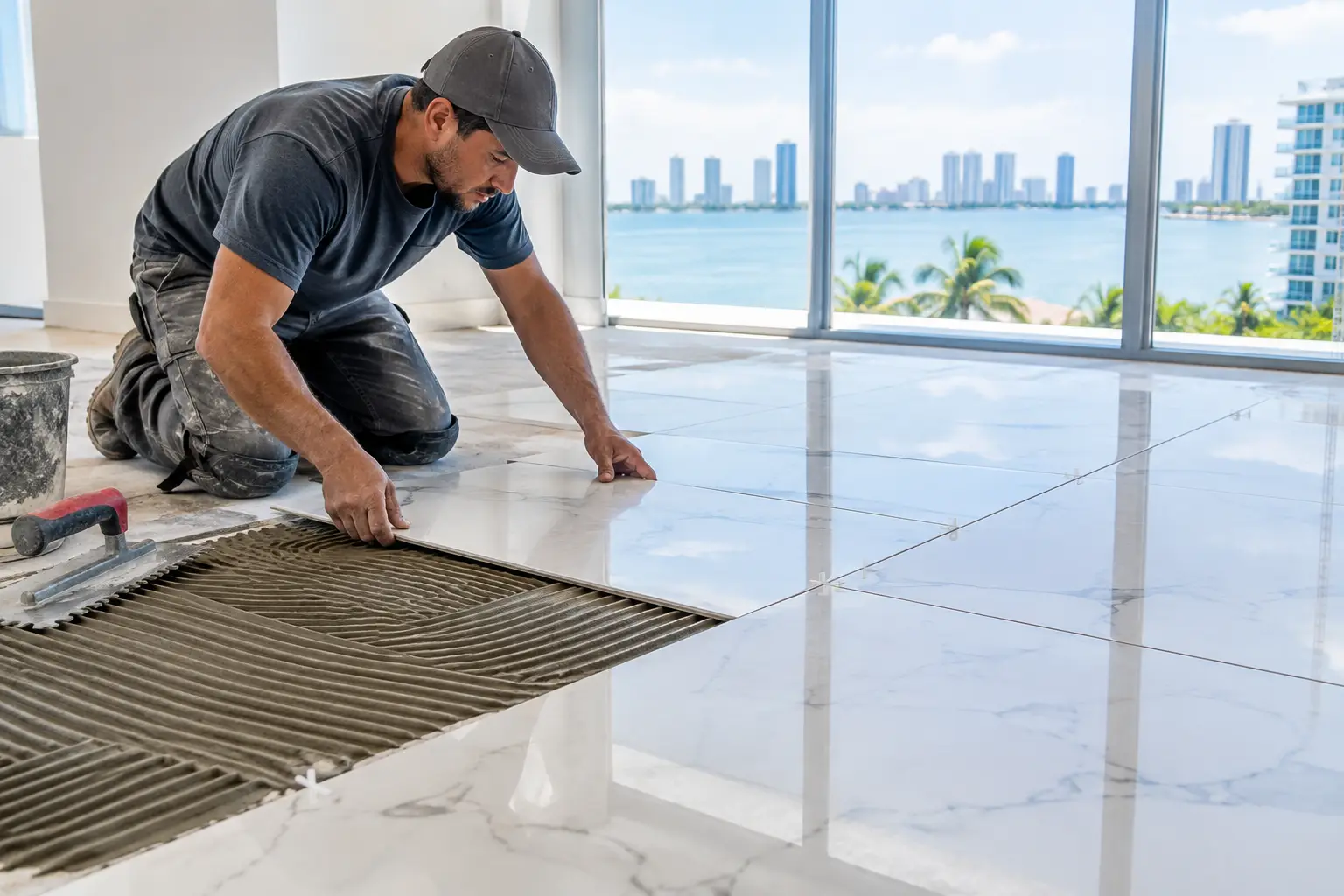
A porcelain floor can make a dated condo, rental unit, or single-family home feel immediately more current. But porcelain tile installation Miami property owners can depend on is not just about selecting a beautiful tile. The finished result relies on a flat, prepared surface, a thoughtful layout, appropriate setting materials, and clean finishing details that hold up to South Florida living.
Porcelain is a practical choice for busy homes, apartments, bathrooms, kitchens, and common interior areas. It handles humidity well, resists stains, and offers the clean, refined appearance many owners want without the maintenance demands of some natural materials. Still, tile is unforgiving of shortcuts. A small issue below the surface can become visible through uneven edges, cracked grout, loose tiles, or water concerns later.
Why Porcelain Works So Well in Miami Homes
Porcelain tile is denser and less absorbent than standard ceramic tile. That makes it a strong option for interiors where humidity, wet shoes, spills, and frequent cleaning are part of everyday life. In a Miami bathroom or kitchen, it can support a bright, spa-like finish while remaining easy to maintain.
Design flexibility is another advantage. Large-format porcelain can create a clean, open look in living areas. Wood-look porcelain brings warmth to rental property renovations and family spaces without the same sensitivity to moisture as hardwood. Stone-look porcelain can give a bathroom or entry a more elevated appearance while offering predictable care.
The right selection depends on the room and the property. A glossy tile may look striking on a feature wall but may not be the best flooring choice for a wet bathroom. Large tiles can reduce grout lines and make a room appear larger, but they require a flatter substrate and skilled layout planning. For high-traffic rentals and apartment turnovers, a durable, readily available tile size and color may make future repairs easier.
Porcelain Tile Installation in Miami Starts Below the Tile
The most important work often happens before the first tile is set. Tile does not correct a weak, uneven, or moisture-affected subfloor. It follows the surface beneath it.
A professional installation begins with evaluating the existing floor or wall. The scope may include removing old flooring, checking for damaged areas, correcting unevenness, repairing cracks where appropriate, and preparing the surface for the selected tile system. Concrete slabs are common throughout South Florida, but each slab can have its own conditions, including old adhesive, patches, surface variations, or prior moisture exposure.
For a remodel, the installer also needs to account for transitions into adjacent rooms. Tile thickness, underlayment, and leveling materials can affect how the new floor meets bedrooms, hallways, doors, cabinets, and baseboards. Addressing these details early helps avoid awkward height changes or rushed trim work at the end.
In bathrooms, preparation also includes a close look at the surrounding finishes. If the project involves a shower, waterproofing and drainage details require careful coordination before tile is installed. A beautiful porcelain surface cannot compensate for poor work behind the wall or beneath the floor.
Flatness Matters, Especially With Large-Format Tile
Large-format tile has become a favorite in modern Miami interiors because it creates broad, continuous visual lines. It also shows imperfections more readily. If the substrate is not sufficiently flat, corners can sit higher than neighboring tiles, a condition commonly called lippage.
Depending on the condition of the surface, preparation may involve patching, leveling, or other corrective work. This is one reason an accurate estimate should be based on an in-person assessment whenever possible. A low quote that ignores floor preparation can turn into change requests later or, worse, a floor that does not perform as it should.
Layout Is Where a Tile Floor Begins to Look Intentional
A quality installation is planned, not simply started at one wall. Before setting tile, the installer considers the room's dimensions, focal points, doorways, cabinets, and the sight lines people notice first when entering.
The goal is usually to avoid narrow, distracting cuts along prominent walls or at a main entry. In a kitchen, layout should work with cabinet lines and islands. In a bathroom, it should complement the vanity, shower opening, and toilet area. For open-concept living areas, a consistent tile direction can help rooms feel connected.
Pattern choice affects both the look and the labor involved. Straight-set tile offers a crisp, contemporary style and can be an efficient option for larger areas. Offset patterns, diagonal layouts, herringbone, borders, and mixed-size designs can add character, though they typically require more cuts, more planning, and additional material allowance. The best choice balances the design goal with the property's use, budget, and schedule.
Materials and Details That Protect the Finished Look
Porcelain tile needs compatible mortar, grout, spacers, and movement accommodations. These materials are not minor accessories. They support bond strength, alignment, and long-term performance.
Grout color has a major visual impact. A close match gives the floor a quieter, more continuous appearance. A contrasting grout emphasizes the tile pattern and can be useful for smaller formats or decorative installations. In rentals and high-use spaces, a midtone grout often makes practical sense because it is less likely to show every day-to-day mark than bright white.
Joint width should be selected for the specific tile, its size variation, and the design. Rectified porcelain can often accommodate narrower joints, but very tight joints are not automatically better. Proper spacing allows for installation tolerances and gives the floor a balanced finish.
Movement joints are another detail that should not be overlooked in larger rooms or areas where tile meets other materials. Buildings move slightly with temperature changes, settlement, and normal use. Planning for that movement helps reduce stress on the installation.
What Can Affect the Schedule and Estimate
Every porcelain tile project has a different scope. The tile itself is only one part of the investment. Removal and disposal of existing flooring, subfloor repairs, surface leveling, furniture moving, baseboard removal and replacement, tile size, pattern complexity, stairs, and access conditions can all affect labor and timing.
Occupied condos and apartment communities may also have work-hour rules, elevator reservations, insurance documentation requirements, or approval procedures. In some buildings, material delivery and debris removal need to be coordinated in advance. These are operational details, but managing them well is part of keeping a project organized.
Permitting is not typically required for a straightforward interior flooring replacement, but the answer can change if the work expands into plumbing, electrical, structural changes, or a larger bathroom or kitchen renovation. Property owners should also check condominium or HOA requirements before work begins.
A clear estimate should define the planned scope, including demolition, preparation assumptions, installation areas, and finish work. If hidden conditions are uncovered after old flooring is removed, the contractor should explain the issue, present practical options, and communicate any effect on cost or schedule before proceeding.
Choosing Tile for a Rental, Turnover, or Long-Term Home
For a homeowner planning a long-term renovation, tile selection can be driven by personal style. A soft stone look, oversized format, or statement bathroom wall may be worth the added planning because it supports the vision for the home.
For landlords, investors, and property managers, the decision often centers on durability, availability, and consistency across units. A neutral porcelain tile that can be reordered is valuable when future repairs or unit turns are needed. Choosing a product with reliable availability can be more useful than selecting a one-time trend that may be difficult to match later.
In either case, ordering enough tile is essential. Extra material allows for cuts, breakage, pattern alignment, and future repairs. The exact amount depends on the tile format and layout, with more complex patterns generally requiring a higher allowance.
A More Organized Path to a Finished Space
The best tile projects feel straightforward because the planning was thorough. Material selections are confirmed, the site is prepared, the layout is reviewed, and the team communicates clearly about access, protection of adjacent areas, and finishing details such as transitions and baseboards.
JT Express Solutions helps Miami and South Florida property owners coordinate porcelain tile installation with the interior work around it, including drywall repair, painting, trim, bathroom updates, and rental turnover improvements. That broader perspective can keep the finished space cohesive instead of treating the floor as an isolated task.
If you are considering porcelain tile for a home, rental unit, or interior renovation, request an estimate with the room dimensions, tile selection if available, and a few photos of the existing space. A clear site review is the best starting point for a floor that looks intentional from the first step through years of daily use.