Choose Vinyl Planks for Rentals That Hold Up
By JT Express Solutions ·
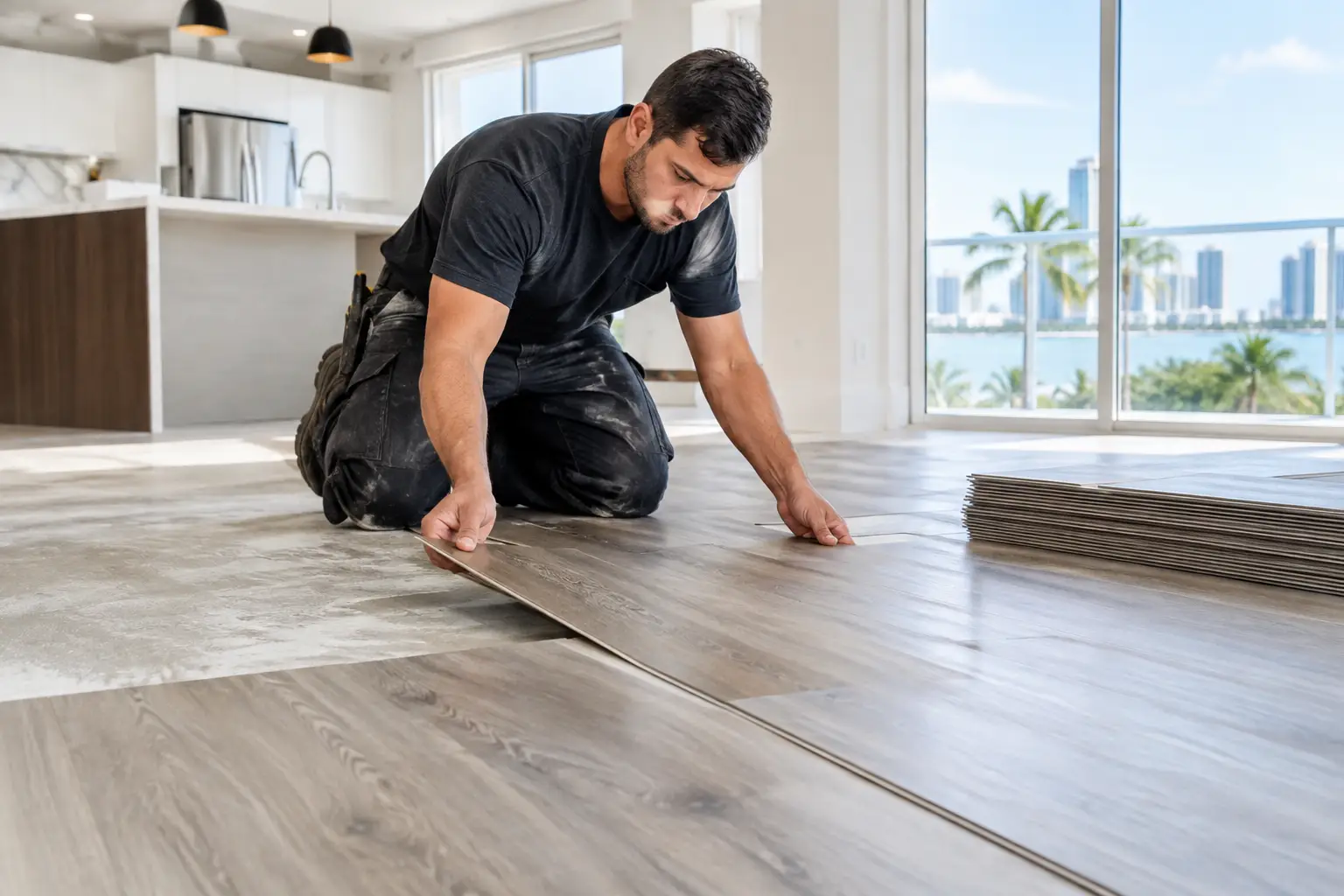
A rental floor gets judged fast. A prospective tenant notices the color, cleanliness, and condition before they ask about the lease terms. Then the floor has to survive moving furniture, wet shoes, pet accidents, kitchen spills, and the next turnover. When you choose vinyl planks for rentals, the right decision is not simply the lowest price per square foot. It is the product and installation plan that keeps the unit attractive without creating repeat repair costs.
For Miami-Dade landlords and property managers, flooring also has to account for humidity, concrete slabs, and condo association rules. Luxury vinyl plank, commonly called LVP, can be an excellent fit, but not every plank labeled waterproof is built for rental use.
Start With the Rental's Real Use
A one-bedroom condo with a single professional tenant needs a different floor than a ground-level duplex that may see children, pets, and frequent move-ins. Before selecting a color or texture, consider the property’s traffic level, whether it is furnished, how quickly it must be turned between tenants, and what sits beneath the existing floor.
In South Florida, many rentals have concrete subfloors. Concrete can retain or release moisture, especially in older buildings or first-floor units. Vinyl is more forgiving than wood, but the slab still needs to be evaluated for moisture, flatness, and surface condition. Installing a new floor over an uneven slab can leave joints stressed, create a hollow sound underfoot, or cause planks to separate over time.
A smart rental selection balances appearance with serviceability. The floor should look elevated enough to support the rent you are asking, while remaining practical enough that a damaged plank can be addressed without replacing an entire room.
Choose a Wear Layer Built for Turnovers
The wear layer is the clear protective surface on top of a vinyl plank. It is one of the most meaningful quality differences between entry-level and rental-ready material. Thickness is commonly measured in mil, not millimeters.
For light-use rentals, a 12-mil wear layer may be acceptable when the tenant profile is stable and the property is carefully maintained. For most apartments, condos, and single-family rentals, 20 mil is a more dependable target. It offers better resistance to scuffs from furniture, abrasion near entry doors, and day-to-day traffic. High-traffic common areas or units with frequent turnover may justify a commercial-grade option, but paying for the heaviest wear layer available is not always necessary.
Do not confuse total plank thickness with wear-layer thickness. A thick plank can feel more substantial and hide minor subfloor variation better, yet a thin protective surface may still show wear early. Review both specifications before approving a material.
Waterproof Does Not Mean Problem-Proof
Most quality vinyl planks have a waterproof surface, which makes them useful in kitchens, bathrooms, and laundry areas. That is a major advantage over laminate and many wood products. Still, water can reach the edges of the room, the perimeter beneath baseboards, or an opening around a toilet if there is a plumbing leak.
Waterproof flooring is not a substitute for correcting leaks, failed caulking, or moisture coming through a concrete slab. If a unit has recurring moisture issues, the source should be addressed before flooring installation. Otherwise, mildew, damaged drywall, or adhesive failure may become the bigger repair.
Select the Right Core and Installation System
LVP typically comes in floating click-lock formats or glue-down formats. Both can work in rentals, but they solve different problems.
Click-lock planks float over the prepared subfloor and can be efficient for many apartment turnovers. They are comfortable underfoot, can help with small imperfections when the floor is properly prepared, and are often easier to replace in a localized area. The trade-off is that floating floors need expansion space at walls and fixed objects. Poor perimeter detailing, heavy built-ins installed on top of the floor, or an uneven slab can lead to movement and joint issues.
Glue-down vinyl is often a strong choice for busy rentals, hallways, and spaces where a firm, low-profile floor is preferred. Individual planks can be replaced more cleanly after damage, and there is no floating-floor movement. However, glue-down material is less forgiving of an imperfect subfloor. Proper patching, leveling, moisture testing, and adhesive selection matter a great deal.
Rigid-core products, including SPC, are popular because they feel stable and resist dents better than softer vinyl. They can be well suited to rental interiors, particularly when furniture is moved often. But rigid core does not eliminate the need for subfloor preparation. In fact, some rigid planks can telegraph imperfections or develop stressed locking edges when installed over a floor that is not sufficiently flat.
Pick Color for Long-Term Leasing, Not a Showroom Moment
Very dark floors can show dust, pet hair, and footprints. Very pale or heavily weathered patterns can make repairs and replacement planks more noticeable. For most rentals, a mid-tone oak look with a natural grain pattern is the safer long-term choice.
Warm neutral shades work with more paint colors, cabinet finishes, and furnishing styles. They help a unit feel clean and current without forcing the next renovation around a trendy gray or dramatic color. A matte or low-sheen finish is also practical because it disguises minor scratching better than a glossy surface.
Order enough material from the same production run for the project, then keep a sealed carton on site when possible. Manufacturers can change colors, textures, and locking systems. A spare box can save time when one damaged plank needs replacement during a future turnover.
Budget for the Work Below the Planks
The material price is only part of the flooring cost. In rental properties, the condition of the existing floor often determines whether the project stays straightforward or needs additional work.
A realistic installation scope may include removal and disposal of old flooring, concrete scraping, adhesive removal, crack repair, floor patching or leveling, moisture-related preparation, baseboard removal or replacement, undercutting door jambs, transitions at doorways, and furniture moving. In bathrooms, careful detailing around toilets, vanities, and thresholds is especially important.
Baseboards deserve attention. Installing new flooring without a clear baseboard plan can leave uneven gaps or mismatched quarter-round that makes an otherwise attractive renovation look like a quick patch. During a broader apartment turnover, replacing worn baseboards and touching up walls often gives the new floor the finished appearance tenants expect.
Check Building Rules Before Ordering Material
Condo and HOA properties may require architectural review, approved underlayment, sound-control documentation, designated work hours, elevator reservations, certificates of insurance, or advance notice to management. Some buildings have specific requirements for flooring above lower-level units, especially where sound transfer is a concern.
These rules can affect the product choice and schedule. A plank with an attached pad may not meet a building’s acoustic requirement, while adding another underlayment may void the flooring manufacturer’s installation instructions. Confirm the building requirements first, then select a compatible system. Ordering material before approval can create avoidable delays and return costs.
For occupied rentals, plan the work around access, dust control, furniture relocation, and curing or acclimation requirements where applicable. For vacant units, coordinate flooring with painting, drywall repairs, cabinet work, and final cleaning so the new surface is not damaged by later trades.
Make the Decision With the Next Five Years in Mind
The best rental flooring is rarely the cheapest plank and rarely the most decorative sample in the showroom. It is a durable, neutral product with an appropriate wear layer, a core suited to the subfloor, and an installation method that matches the unit’s traffic and building rules.
For a Miami-Dade rental improvement or apartment turnover, JT Express Solutions can assess the existing conditions, recommend practical flooring options, and organize the finishing details that make the unit ready to show. Request an estimate or consultation before ordering material, especially if the property has concrete-slab moisture concerns, condo approval requirements, or uneven existing floors.