Refinish Versus Replace Kitchen Cabinets?
By JT Express Solutions ·
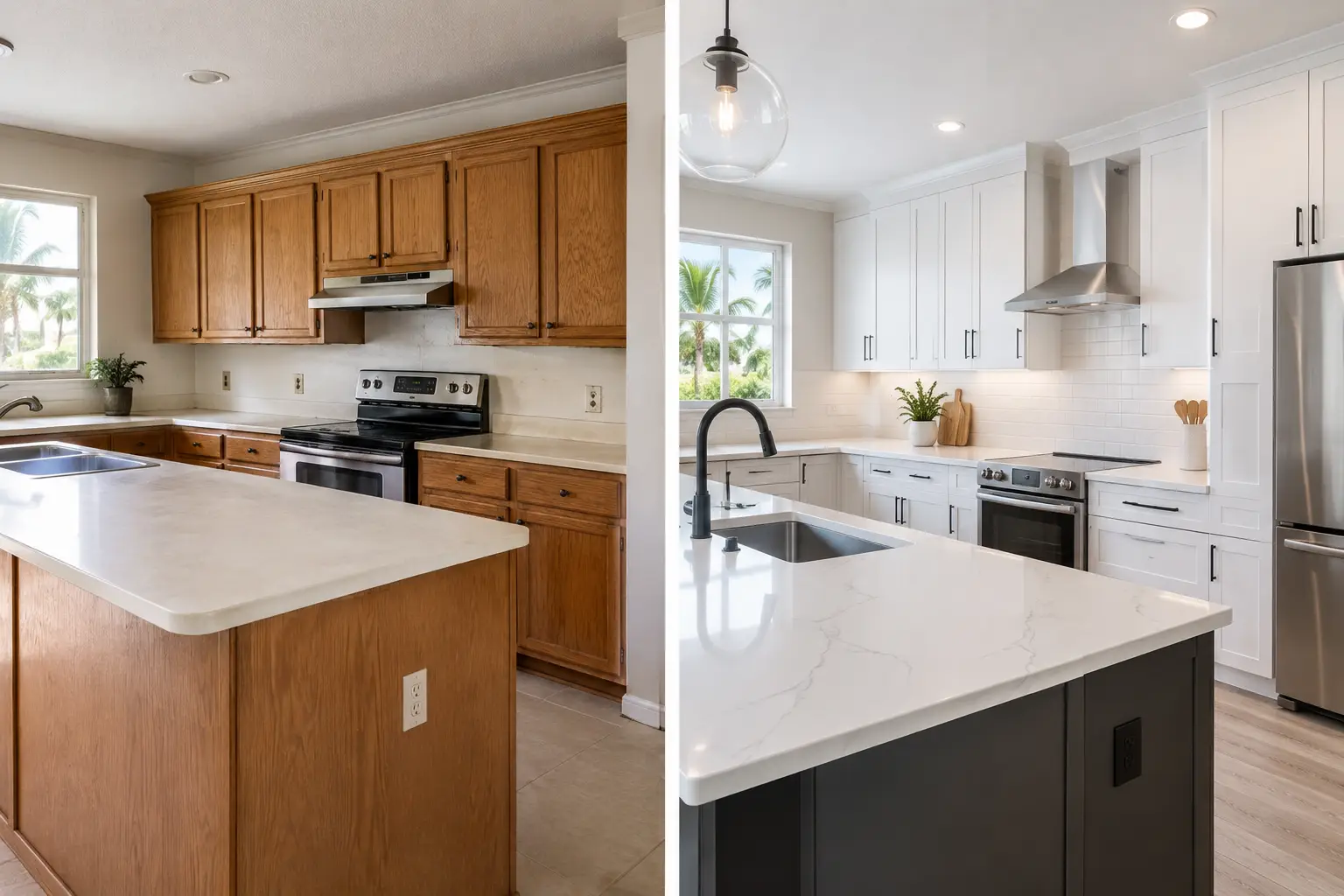
A kitchen can look dated long before it is truly worn out. The central question is whether to refinish versus replace kitchen cabinets - and the answer is rarely just about the visible finish. Cabinet boxes may be structurally sound but covered in an orange-toned stain, chipped paint, or doors that no longer match the rest of the home. On the other hand, swelling at the sink base, poor storage, and a cramped layout can make a cosmetic update feel like money spent twice.
For Miami-Dade homeowners, landlords, and property managers, humidity adds another layer to the decision. Materials, ventilation, water exposure, condo rules, and the condition of the existing cabinets all affect which route delivers the better result. The right choice should improve both the kitchen’s appearance and its day-to-day function without creating avoidable surprises during the project.
When Refinishing Kitchen Cabinets Makes Sense
Refinishing works best when the cabinet boxes are solid, the layout functions well, and the primary problem is appearance. This may involve professional cleaning and prep, repair of minor dents or loose veneer, sanding where appropriate, priming, and applying a durable cabinet-grade coating. It can also include new hinges, pulls, soft-close hardware, and updated countertops or backsplash to create a more complete transformation.
A well-executed refinishing project can take dark, heavy cabinetry and bring it into a brighter, more current direction. White, warm greige, soft taupe, deep navy, and natural wood tones can all work beautifully depending on the home’s flooring, wall color, lighting, and design goals. In a condo kitchen or rental turnover, refinishing may deliver the polished visual improvement needed without the disruption of removing an entire cabinet system.
Refinishing is usually the better path when cabinet doors close properly, drawers operate reliably, and the boxes show no serious water damage. It is also a strong value when you want to preserve an existing stone countertop that is still in good condition. Removing cabinets while keeping a countertop intact is not always practical, so retaining sound cabinets can protect more of the existing kitchen investment.
What a Quality Refinish Requires
Cabinet refinishing is not simply rolling paint over old doors. Kitchen surfaces collect grease, cooking residue, cleaning-product buildup, and hand oils around pulls and edges. If the surfaces are not properly cleaned, sanded or deglossed as needed, repaired, primed, and coated with compatible materials, the finish can chip or peel prematurely.
South Florida humidity also matters. Cabinet coatings need adequate drying conditions and proper ventilation. A professional should assess the substrate before recommending a paint system, particularly for thermofoil doors, damaged laminate, or cabinets with extensive veneer failure. Some surfaces can be refinished successfully with the correct preparation. Others are poor candidates and will not produce the high-end result a kitchen deserves.
Refinishing has limits. It does not make shallow cabinets deeper, create room for a pull-out trash unit, correct a poorly placed refrigerator, or solve a lack of pantry storage. It improves what is already there. If the underlying kitchen design works, that can be exactly what you need.
Refinish Versus Replace Kitchen Cabinets: Signs You Need Replacement
Replacement is usually the smarter investment when the cabinets have structural failures, repeated moisture damage, or a layout that no longer serves the household. The most common red flag is the sink-base cabinet. Slow leaks from supply lines, drain connections, disposal units, or filtered-water systems can damage particleboard boxes from the inside out. Once the material is swollen, soft, crumbling, or visibly sagging, a new finish will not restore its strength.
Cabinet replacement also makes sense when doors and drawers are failing throughout the kitchen, not just in one isolated area. Drawers that rack, broken face frames, warped doors, detached hinges, and cabinets pulling away from the wall should be evaluated as functional issues, not cosmetic ones. In a rental property, continuing to patch failing cabinets can lead to more frequent maintenance calls and a kitchen that still feels tired to prospective tenants.
A full replacement gives you the chance to correct the layout. That could mean adding deeper drawers for pots, a pantry cabinet, better corner storage, a microwave cabinet, or a more usable island. It also allows the team to coordinate cabinets with new flooring, lighting, backsplash, countertops, and appliances for a more intentional finished space.
For homeowners planning to remain in the property for years, replacement may be worth the added cost when it turns an inefficient kitchen into an extraordinary living environment. For investors preparing a unit for sale or lease, the decision depends on the property level, target renter or buyer, and whether the surrounding finishes support a full kitchen renovation.
Replacement Has More Moving Parts
Replacing cabinets is not just a cabinetry decision. It can affect countertops, plumbing connections, electrical outlets, drywall repairs, flooring transitions, appliance dimensions, and backsplash work. If you change the layout, permits and building approvals may be required depending on the scope.
In Miami-Dade, permit timing should be considered early for projects involving regulated work or significant changes. Condo and HOA communities may also require contractor documentation, work-hour restrictions, elevator reservations, floor protection, insurance certificates, and approval before materials arrive. These operational details are part of a properly managed remodel, not an afterthought.
The upside is that replacement allows better planning from the start. Cabinet materials can be selected for the environment and expected level of use. Plywood construction, properly finished wood, and quality hardware generally perform better than low-grade particleboard in areas vulnerable to moisture. That does not mean every kitchen needs the most expensive cabinet line. It means the cabinet construction should match the home, budget, and long-term plan.
The Cost Drivers Behind Each Option
Refinishing generally costs less than replacing because it retains the cabinet boxes and avoids much of the demolition and installation labor. But pricing still depends on the number of doors and drawers, current finish, repair needs, access, ceiling height, and whether hardware or doors are being upgraded. A small kitchen with simple flat-panel doors is a different project from a large kitchen with detailed profiles, glass fronts, crown molding, and multiple paint colors.
Replacement costs vary more widely. The cabinet style and construction level matter, but so do delivery lead times, demolition, disposal, countertop fabrication, plumbing disconnection and reconnection, electrical changes, drywall work, and final paint. If walls are not square, which is common in older homes and concrete-block construction, installation may require additional fitting and finish work to achieve clean lines.
Avoid making the decision based only on the first number. A low refinishing quote that skips proper prep may not hold up. A cabinet replacement estimate that excludes key finish work can make the final investment look lower than it will be. Clear scope matters more than a vague price comparison.
Questions to Ask Before You Commit
Start by opening every cabinet and drawer. Look under the sink, along the toe kicks, at cabinet sides near the dishwasher, and inside upper cabinets near any prior roof or plumbing leaks. Check for swelling, musty odors, loose hardware, and discoloration. Then consider how you actually use the kitchen. Are you short on storage, counter space, or drawer organization? Do appliances fit poorly? Does the island interrupt traffic flow?
Next, think about the rest of the renovation. If the plan includes only new wall color, lighting, hardware, and a backsplash, refinishing may be the most efficient way to create a refreshed kitchen. If you are changing countertops, moving appliances, opening walls, or creating a more spa-like and custom feel throughout the home, replacement may integrate more naturally with the larger vision.
For condos and occupied homes, disruption deserves honest consideration. Refinishing can often be less invasive, while replacement involves demolition, material delivery, installation, and coordination across several trades. A professional project plan should account for access, dust control, material staging, and realistic sequencing rather than promising an unrealistic turnaround.
Choose the Upgrade That Solves the Real Problem
The best kitchen investment is not automatically the most extensive one. Refinish cabinets when the structure is solid and the room needs a visual reset. Replace them when damage, storage limitations, or layout problems will keep undermining the kitchen after the paint dries.
A site evaluation can reveal details that photos miss, especially water damage, wall conditions, and condo access requirements. JT Express Solutions can help Miami-Dade property owners compare the practical scope, finish options, and renovation path that fits the property. Request an estimate when you are ready to turn a worn kitchen into a space that feels considered, functional, and built for everyday life.