Cabinet Painting Near Me That Holds Up in Miami
By JT Express Solutions ·
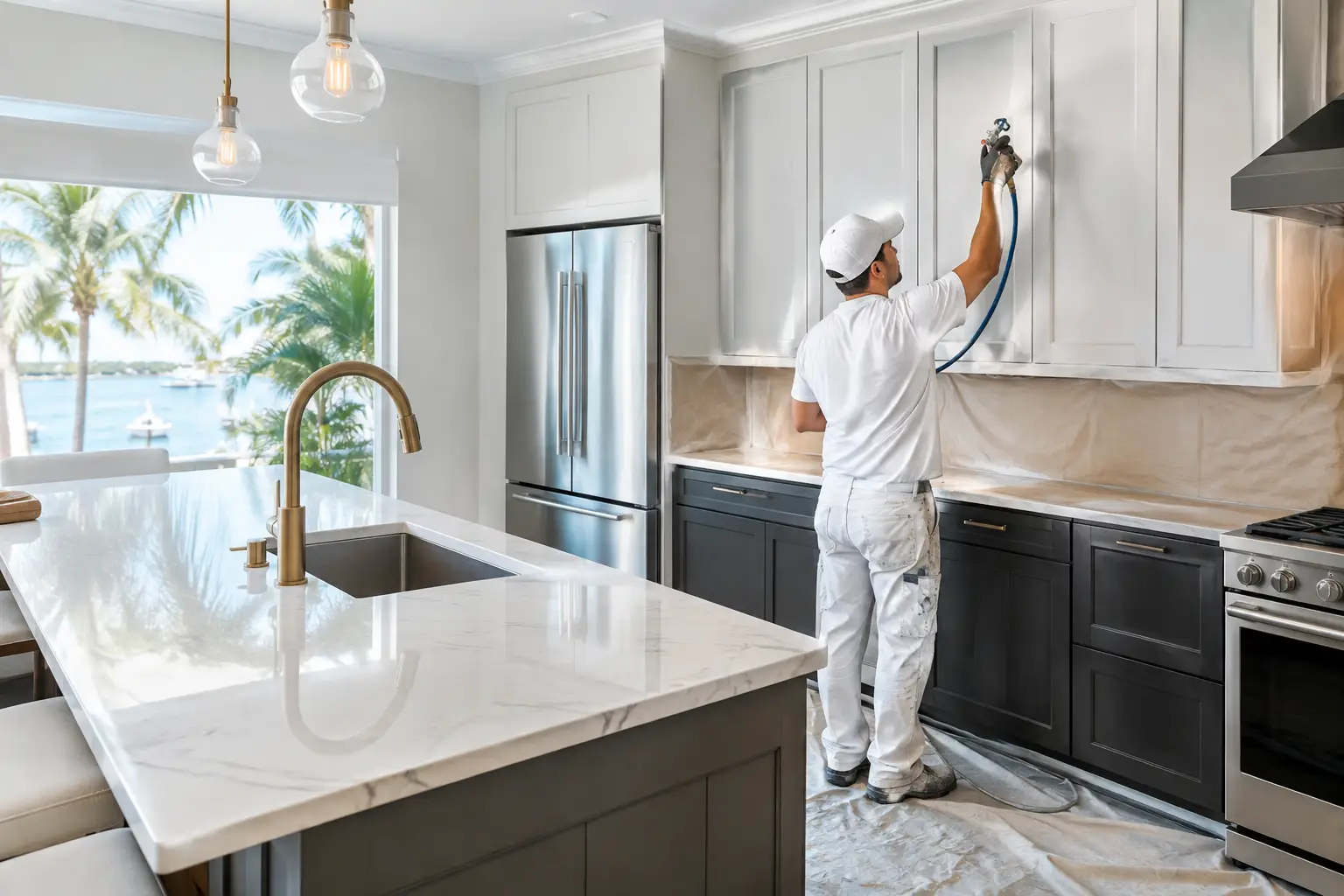
A kitchen can look dated even when its layout still works perfectly. Yellowed oak, worn white doors, builder-grade espresso finishes, and chipped paint around the sink can pull down the entire room. When homeowners search for cabinet painting near me, they are usually not looking for a quick coat of paint. They want a finish that makes the kitchen feel intentional, clean, and worth investing in without taking on a full cabinet replacement.
In Miami-Dade homes, that finish has to handle more than daily cooking. Humidity, air-conditioning cycles, moisture near plumbing, frequent cleaning, and busy family or rental use all affect how cabinet paint performs. The right process can turn solid existing cabinetry into a refined centerpiece. The wrong process can lead to peeling edges, visible grain, tacky doors, and a kitchen that needs attention again far too soon.
What Quality Cabinet Painting Actually Includes
Cabinet painting is a finishing project, but preparation determines the result. A premium-looking painted kitchen does not come from applying a new color over whatever is already on the doors. It comes from evaluating the cabinet material, correcting surface issues, and building a coating system that bonds properly.
The first question is whether the existing cabinets are good candidates. Solid wood doors, many wood veneers, and properly prepared MDF doors can often be refinished successfully. Cabinets with severe water damage, swollen particleboard, separating laminate, loose hinges, or failing drawer boxes may need repairs or selective replacement before painting makes financial sense. Painting can transform a sound cabinet, but it cannot correct a cabinet box that is breaking down from the inside.
A professional scope commonly begins with removing doors, drawer fronts, pulls, and hinges where appropriate. The surfaces are cleaned to remove cooking residue, furniture polish, hand oils, and cleaning-product buildup. This matters more than many people realize. Even cabinets that look clean can carry a thin film that prevents primer from bonding evenly.
After cleaning, surfaces are sanded or mechanically abraded, imperfections are filled, and damaged edges receive attention. Open wood grain may need additional filling if the goal is a smoother, more contemporary appearance. Primer is selected for the cabinet material and existing finish, followed by compatible cabinet-grade coatings. Doors need enough cure time before they are reinstalled and put back into heavy use. A finish can feel dry well before it reaches its full hardness.
Why Miami Kitchens Need a Different Standard
South Florida conditions are not kind to shortcuts. Humidity can slow dry times, affect how coatings level, and make proper ventilation especially important. Kitchens also carry localized moisture from sinks, dishwashers, ice makers, coffee stations, and cooking steam. A cabinet finish should be planned around those realities, not just the color selected from a sample card.
Moisture damage deserves special attention below the kitchen sink. Before refinishing, a contractor should look for staining, swollen cabinet floors, soft side panels, failed caulk, or evidence of an active leak. Painting over a damaged base cabinet may improve its appearance temporarily, but it does not solve the source of the problem. Addressing repairs first protects the new finish and avoids wasting money on cosmetic work that will fail early.
In concrete-block homes and condos, indoor humidity management also matters. A kitchen with poor ventilation or a recurring plumbing issue can create problems around cabinet seams and corners. The best paint system in the world cannot compensate for ongoing water exposure. This is why a clear site review is more valuable than a quote based only on a few photos.
Cabinet Painting Near Me: What to Ask Before Hiring
Local search results can make cabinet painting seem like a simple service to compare by price. It is better to compare the scope. Two estimates may both say “paint cabinets,” while one includes careful removal, surface correction, primer, spray-applied door finishes, and reinstallation, and the other means rolling paint onto doors in place.
Ask how the cabinet material will be identified and prepared. Ask whether doors and drawer fronts will be removed, where the finishing work will take place, and how adjacent counters, floors, appliances, and walls will be protected. For an occupied home, dust control and a workable kitchen-access plan matter just as much as the final color.
You should also ask what happens to hardware. Existing pulls and hinges can be cleaned and reinstalled, but a change in hardware size or placement may leave exposed holes that need filling. Switching from knobs to pulls, or from one pull spacing to another, should be planned before finishing begins. Small hardware decisions can affect the appearance of every door.
Finally, discuss touch-ups and curing expectations honestly. Cabinet coatings are durable when properly specified and applied, but they still need sensible care. Slamming doors before the finish has cured, scrubbing with abrasive pads, or allowing standing water around sink-base edges can shorten the life of the work.
Choosing a Color and Finish That Fits the Room
White remains popular because it brightens a kitchen and works well with many countertop materials. But Miami homes are not limited to plain white cabinets. Soft warm whites can complement creamy quartz and natural stone. Greige, sand, muted sage, smoky blue, and deep charcoal can give a kitchen more character without making it feel trendy for only one season.
The room’s fixed elements should guide the decision. Countertops, backsplash, flooring, wall color, and appliance finish all influence whether a cabinet color feels elevated or disconnected. In a condo with limited natural light, a lighter cabinet color and controlled sheen can make the space feel larger. In a larger home with a strong island or statement stone, a two-tone cabinet plan may create a more custom look.
Sheen is a practical choice as well as a design choice. Higher sheens reflect more light and are easier to wipe down, but they also reveal surface imperfections more readily. Lower sheens can look softer and more upscale, though they may require more careful cleaning. The right balance depends on the cabinet condition, the amount of natural light, and how the kitchen is used.
Condo Rules, Access, and Project Timing
For condo owners, the cabinet-painting process often begins before the first door comes off. Many associations require advance notice for interior work, proof of insurance from vendors, approved work hours, elevator reservations, and protective measures for common areas. Some buildings also have rules about onsite spraying, odors, parking, and debris removal.
These requirements do not make the project difficult, but they should be addressed early. A contractor familiar with occupied South Florida properties will coordinate the practical details around access, protection, and scheduling rather than treating them as an afterthought. If a project includes drywall repair, backsplash removal, flooring, or other interior updates, sequencing becomes even more important.
For landlords, investors, and property managers, cabinet painting can be especially effective during a turnover. It can refresh a kitchen without the cost and waste of replacing usable cabinets. The decision still depends on condition. A well-prepared repaint can help a unit present cleaner and more current, while cabinets with serious water damage or broken construction may call for a different scope.
What Drives Cabinet Painting Costs
A useful estimate is based on more than the number of doors. Cabinet size matters, but so do material, prior coatings, wood grain, repair needs, door profile, hardware changes, access conditions, and the level of protection required in the home.
A simple set of flat-panel doors in good condition generally requires less labor than detailed raised-panel doors with heavy grease buildup, peeling finishes, or multiple previous paint layers. Grain filling, water-damage repairs, and changing hardware layouts can add time because those details affect whether the final result looks polished or patched.
The most affordable proposal is not always the best value if it leaves out surface preparation, proper primer, protection for surrounding finishes, or enough time for curing. Cabinet painting is visible every day. It is worth treating it as a finish investment, not a quick cosmetic patch.
A Better Starting Point for Your Kitchen
A strong cabinet repaint can make an ordinary kitchen feel like an extraordinary living environment, especially when the color, hardware, and surrounding finishes are planned together. It can also be a smart first step before a larger kitchen remodel, allowing you to improve the room now while reserving bigger changes for later.
JT Express Solutions helps Miami-Dade homeowners, landlords, and property managers evaluate cabinet painting alongside the practical details that affect the finished result. Request an estimate or consultation when you are ready to discuss your cabinet condition, preferred look, building requirements, and the scope that will make your kitchen feel finished rather than simply repainted.