How to Choose a Kitchen Cabinet Painter Near Me
By JT Express Solutions ·
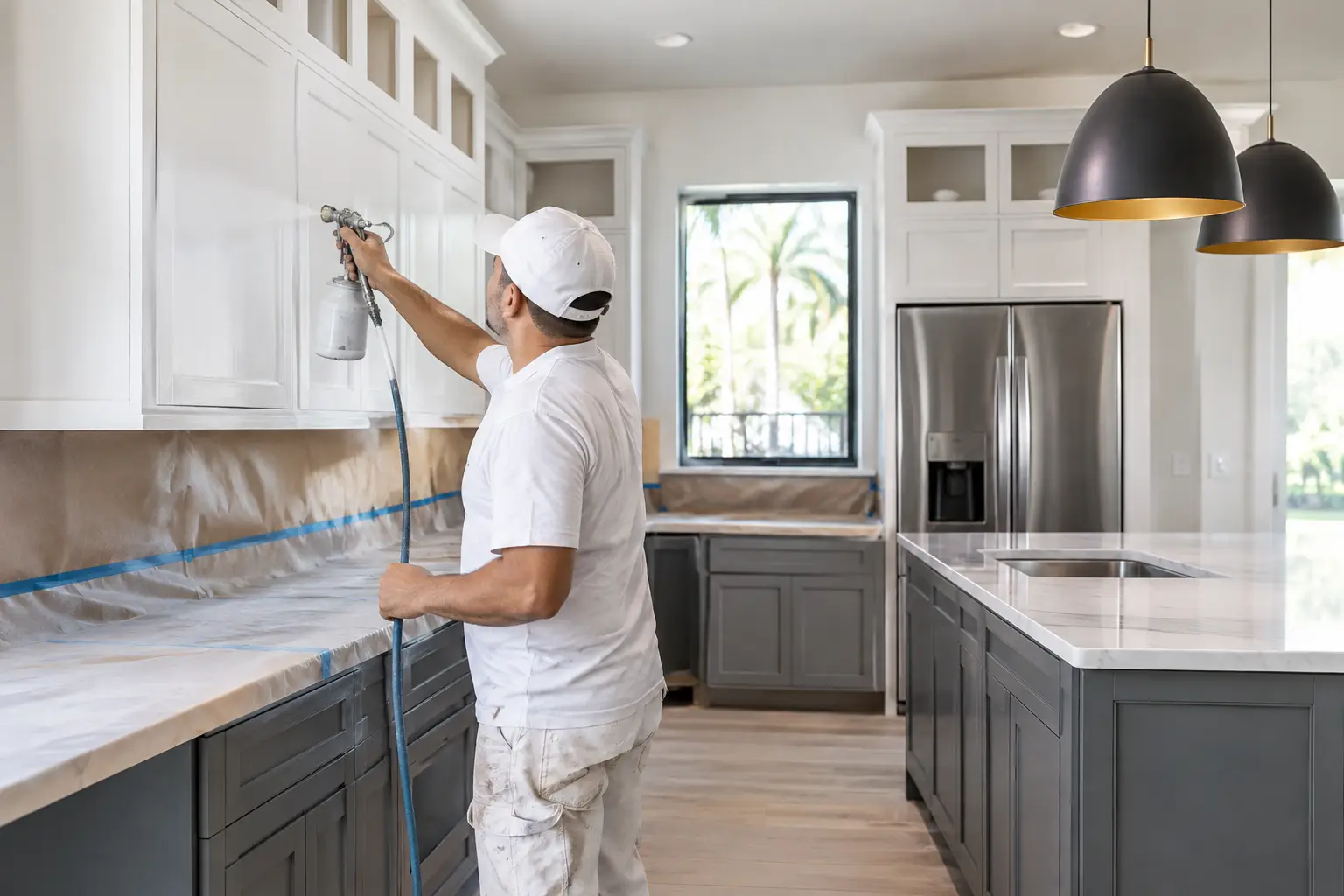
A search for a kitchen cabinet painter near me usually starts after the same realization: the cabinet boxes are still solid, but the finish has become dated, chipped, greasy, or impossible to keep looking clean. In many Miami kitchens, replacement is not automatically the smart move. Professional cabinet painting can create a major visual transformation while preserving a layout that already works.
The difference is in the preparation. Cabinets are touched constantly, exposed to cooking residue, and affected by South Florida humidity. A quality finish is not simply a new color applied over old doors. It is a controlled process that addresses cleaning, adhesion, repairs, coating selection, and a realistic plan for how the kitchen will function during the work.
What a Cabinet Painter Should Inspect First
A dependable painter should look beyond the front of the doors. Before recommending paint, they should inspect the cabinet material, hinge condition, door alignment, water damage around the sink, and any peeling or swelling at the lower boxes. These details determine whether painting is a sound investment or whether selected repairs should happen first.
Solid wood cabinets and quality wood veneer can often be excellent candidates for refinishing. Previously painted cabinets may also be workable, provided the existing coating is stable and the surface can be properly prepared. Laminate and thermofoil cabinets need a more careful conversation. They can sometimes be painted with the right preparation and bonding products, but loose laminate, heat-damaged edges, or peeling thermofoil will not be corrected by paint alone.
In older Miami-Dade homes and condos, cabinet issues are often connected to moisture. A slow leak beneath the sink, inadequate ventilation, or water intrusion from an adjacent wall can cause swelling that no coating can hide for long. The correct approach is to resolve the moisture source, replace compromised material where needed, and then paint sound surfaces.
A Kitchen Cabinet Painter Near Me Should Explain the Process
Ask a contractor to describe the work in plain language. If the scope is limited to "sand and paint," it leaves too many important decisions unanswered. Cabinet painting requires a more deliberate sequence than painting a bedroom wall.
The kitchen should first be protected. Countertops, floors, appliances, backsplashes, and nearby rooms need masking and containment appropriate to the project. Doors and drawer fronts are typically removed, labeled, and handled separately so the finish reaches edges and profiles consistently. Hardware is removed or carefully protected based on the agreed scope.
Next comes cleaning and surface preparation. Kitchen cabinets collect oils and residues that can interfere with adhesion, even when they appear clean. The surfaces need thorough degreasing, followed by sanding or mechanical abrasion to create a suitable profile for primer. Dings, open joints, worn corners, and former hardware holes should be repaired before the finish coats begin.
Primer is not an optional shortcut step. The right primer helps seal stains, improve adhesion, and create an even base for the selected color. After priming, minor imperfections often become easier to see, which is why a second round of sanding and detail work may be needed. Quality cabinet coatings are then applied in controlled coats with sufficient drying and curing time.
Spraying can produce a refined, furniture-like finish on doors and drawer fronts when the work area, containment, and product are managed properly. Brushing and rolling may be appropriate for certain cabinet boxes or tight locations. Neither method is automatically better in every situation. What matters is that the method matches the material, the desired look, and the conditions inside the home.
Why South Florida Conditions Matter
Miami's humidity changes the conversation around interior finishes. Moisture in the air can affect drying times, and kitchens add heat, steam, and frequent cleaning to the equation. A contractor should choose coating systems designed for cabinetry rather than relying on ordinary wall paint that can scuff, soften, or show wear too quickly.
Color selection also deserves practical thought. Bright white cabinets remain popular because they make compact kitchens feel open, especially in condos with limited natural light. But whites vary widely. Some read crisp and modern, while others pull warm against cream flooring or stone countertops. Soft greige, light oak-inspired neutrals, deep navy, charcoal, and muted green can add character, particularly on an island or lower cabinets.
A beautiful color should still work with the fixed elements you are keeping. Countertops, backsplash tile, flooring, and stainless or brass hardware all influence the final result. A cabinet color that looks extraordinary on a small sample may feel too cool, too stark, or too dark across an entire kitchen. Reviewing samples against the actual finishes and under both daylight and evening lighting helps prevent expensive second thoughts.
Condo Rules and Access Can Affect the Schedule
For condo owners, the painting itself is only part of the plan. Many associations require advance notice, proof of insurance, designated work hours, elevator reservations, and specific rules for bringing materials through common areas. Some buildings limit noisy work, require protective coverings in corridors, or have procedures for contractor check-in.
These requirements do not necessarily make a cabinet project difficult, but they should be handled before work begins. A clear scope and schedule help avoid a situation where doors have been removed but access or building approvals have not been finalized. If the kitchen update includes drywall repair, electrical changes, plumbing adjustments, or layout modifications, additional review and permitting considerations may apply in Miami-Dade County.
For rental properties and apartment turnovers, timing is often the deciding factor. Painting cabinets can improve perceived value and refresh a unit without the cost and disruption of a full kitchen replacement. Still, the schedule should allow for proper preparation and curing. Rushing a turnover can create touch-up issues that cost more once a new tenant is in place.
What Drives the Cost of Cabinet Painting
Cabinet painting is usually priced by the actual scope, not simply by the square footage of the kitchen. The number of doors and drawer fronts matters, but so do cabinet condition, door style, repairs, finish selection, site access, and how much protection is required.
A simple kitchen with flat doors, sound surfaces, and easy access will require less labor than a large kitchen with detailed profiles, glass inserts, damaged bases, multiple colors, or heavy grease buildup. Changing hardware can add work if new pulls require holes to be filled and drilled in a different location. Painting the cabinet interiors, modifying doors, or repairing water-damaged components should also be clearly separated in the estimate.
Be cautious with vague pricing that does not state what is included. A useful proposal should identify the preparation, repairs included or excluded, primer and finish approach, hardware handling, protection of surrounding areas, and expected work sequence. Transparent details make it easier to compare options fairly.
Questions Worth Asking Before You Hire
The right contractor should welcome practical questions. Ask what cabinet materials they believe you have and whether any areas should be repaired before painting. Ask how they will protect countertops and appliances, whether doors and drawer fronts are removed, and what product system they plan to use.
It is also reasonable to ask how long the kitchen will be affected and when the painted surfaces can return to normal use. Dry-to-touch is not the same as fully cured. Cabinet doors need careful use while the coating reaches its intended hardness.
Finally, review examples of completed cabinetry work with an eye for details: clean lines around hinges, consistent color on edges, smooth door profiles, and no paint buildup in corners. The goal is not merely to make cabinets look newer. It is to create a finished kitchen that feels intentional, durable, and worthy of the rest of the home.
Plan the Update Around the Whole Kitchen
Cabinet painting can be the centerpiece of a focused kitchen refresh. It pairs well with updated pulls, new baseboards, drywall touch-ups, fresh wall paint, or a backsplash replacement when the scope calls for it. In a full interior remodeling project, it can also help establish the color direction for flooring, trim, and lighting.
JT Express Solutions helps Miami-Dade property owners organize cabinet painting and related interior improvements with a clear scope, careful preparation, and attention to the details that affect the finished look. Request an estimate or consultation before choosing a color, especially if moisture damage, condo approvals, or adjacent repairs may influence the project.
A well-planned cabinet finish can turn a tired kitchen into an extraordinary living environment without replacing what is still built to serve you well.