Drywall Patch Versus Wall Replacement Choices
By JT Express Solutions ·
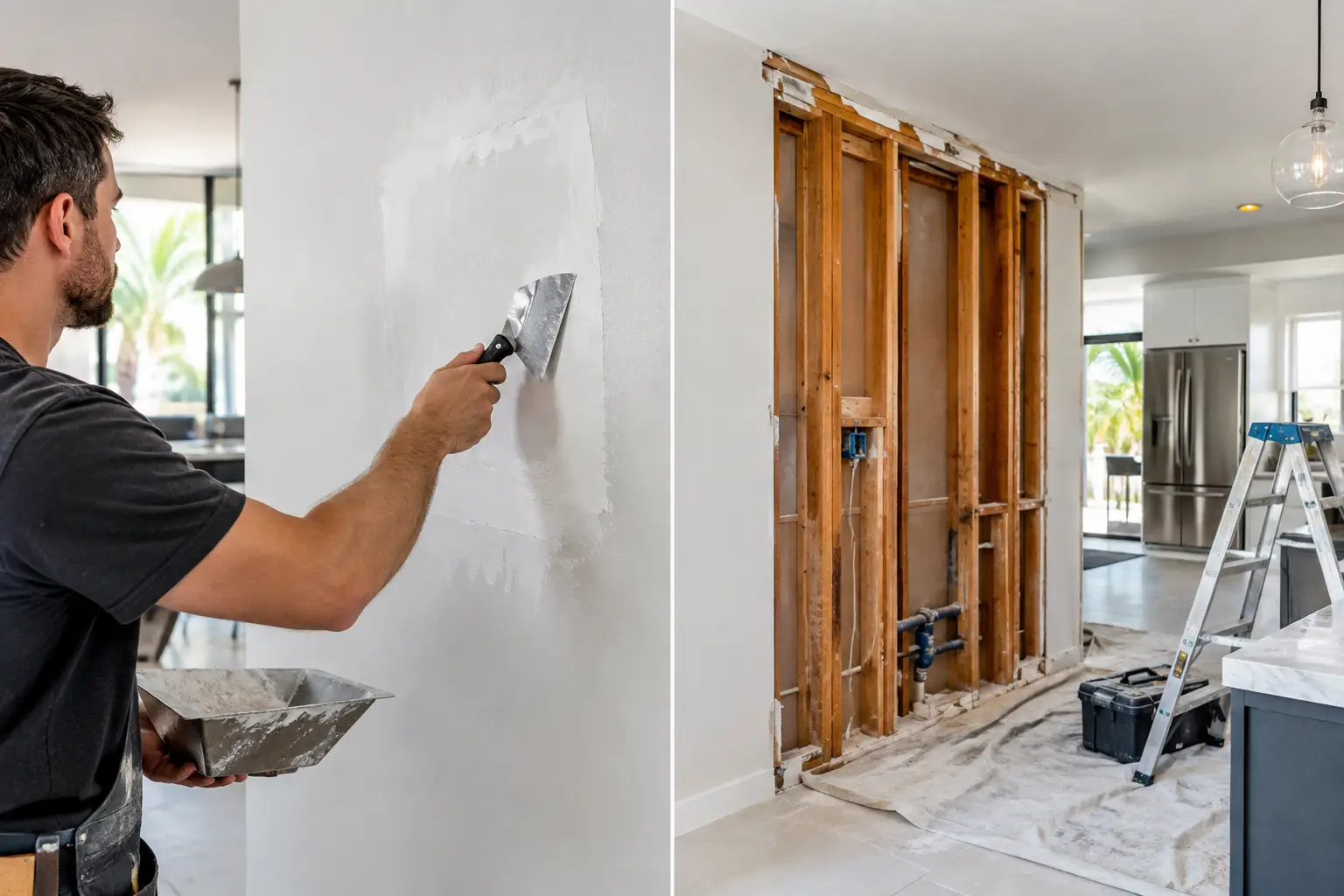
A small hole behind a door is one thing. A soft, stained wall below an AC drain line, a recurring crack beside a window, or bubbling paint in a condo bathroom is another. The decision between drywall patch versus wall replacement should be based on what caused the damage, not just what the wall looks like after a quick coat of paint.
For Miami-Dade homeowners, landlords, and property managers, drywall problems often come with a moisture story. Humidity, plumbing leaks, wind-driven rain, condensation, and poorly sealed openings can affect the gypsum core, framing, insulation, and finishes behind the visible surface. A clean-looking patch is the right solution when the surrounding wall is sound. When the damage has spread or the source remains unresolved, replacing a larger section is usually the more dependable investment.
When a Drywall Patch Is the Right Choice
A professional patch makes sense when damage is isolated and dry. Common examples include doorknob holes, minor moving damage, small dents, removed wall anchors, or a limited opening made for an electrical or plumbing repair. In these cases, the surrounding drywall is firm, the framing is unaffected, and there is no active moisture concern.
The quality of the finish matters as much as the repair itself. A proper patch is cut back to stable material, supported where needed, taped, and finished with multiple thin coats of joint compound. The goal is not merely to cover the opening. It is to feather the repair wide enough that it disappears under primer and paint, even in the strong natural light common in South Florida interiors.
Texture also affects the scope. Smooth walls can reveal even slight ridges, while orange-peel, knockdown, and hand-applied textures require careful blending. In a hallway, living room, or freshly updated rental unit, an uneven patch can be more noticeable than the original damage. This is why a small repair may still require painting from corner to corner on that wall for a uniform color and sheen.
A patch is usually the practical choice when it meets three conditions: the damaged area is limited, the wall is dry, and the original problem has been corrected. It preserves more of the existing finish and keeps disruption low, especially for occupied homes and apartment turnovers.
Drywall Patch Versus Wall Replacement After Water Damage
Water changes the decision. Drywall is made with a gypsum core and paper facing, both of which can deteriorate after significant or repeated moisture exposure. A wall may feel dry at the surface while insulation, base plates, or the back of the drywall still show signs of a past leak.
Replacement is often the better route when drywall is swollen, soft, crumbling, delaminating, visibly stained across a broad area, or affected by microbial growth. It is also worth opening and replacing the wall section when a leak has traveled downward or sideways, which is common around plumbing lines, shower walls, windows, and roof-to-wall transitions.
Before closing the wall, the moisture source needs to be addressed and the cavity needs adequate time to dry. Replacing drywall before that step can create the same problem again behind a fresh finish. For bathroom repairs, moisture-resistant drywall may be appropriate in non-wet wall areas, while tile shower assemblies require materials selected for that specific wet application. The right material depends on location, exposure, and the finish being installed.
In Miami homes with concrete-block exterior walls, interior drywall may be installed over furring strips, framing, or a direct finishing system. That construction affects the repair plan. If moisture is entering through an exterior opening or condensing against the wall, the visible drywall is not necessarily the starting point of the problem. A careful evaluation helps avoid replacing material without addressing the condition behind it.
Signs That Point to Replacement Instead of a Patch
A larger replacement does not always mean rebuilding an entire room. Often, it means removing the affected section from stud to stud, or from a clean horizontal cut above the damage down to the baseboard area. This creates sound edges for a lasting repair and gives the contractor access to inspect what is inside the wall.
Replacement deserves serious consideration when you see more than one of these conditions:
- Drywall feels soft, flexes, or breaks apart when lightly pressed.
- Stains return after priming and painting, especially after rain or appliance use.
- Cracks keep reopening along seams, corners, doors, or windows.
- The repair area contains multiple old patches, sagging tape, or uneven texture.
- There is evidence of ongoing plumbing moisture, condensation, or water intrusion.
Recurring cracks deserve a closer look. Some are simple movement at a drywall joint and can be repaired with proper tape and compound. Others point to door-frame movement, loose framing, settlement, or an issue at a window opening. Covering a moving crack without correcting the cause may improve the appearance temporarily, but it rarely delivers the refined finish expected in a remodeled space.
Cost Drivers Beyond the Size of the Hole
The least expensive-looking option is not always the least expensive repair over time. A small patch may be efficient, but the final scope can grow if it requires texture matching, wall-wide painting, baseboard removal, furniture protection, or access coordination in an occupied unit.
Wall replacement has more labor and material involved because it may include demolition, disposal, cavity inspection, drywall installation, taping, finishing, sanding, priming, painting, and reinstalling trim. If damage is connected to plumbing or an exterior leak, that underlying repair should be considered separately from the wall finish work.
For condo owners, logistics can influence cost and schedule just as much as the repair itself. Many buildings require certificates of insurance, work-hour windows, elevator reservations, protective coverings, or management approval before work begins. If the repair involves plumbing, electrical changes, or a larger renovation scope, additional building or local requirements may apply. Confirming those details early keeps a simple repair from becoming a delayed project.
For landlords and property managers, the decision should also account for durability and turnover timing. Repeated spot repairs in the same area can create a visibly uneven wall and more vacancy-day coordination later. Replacing a compromised section once, then finishing and painting it correctly, can be the cleaner choice for a rental ready for its next tenant.
What a Professional Assessment Should Cover
A useful site assessment starts with the cause, not the compound. The contractor should identify whether damage is cosmetic, impact-related, moisture-related, or caused by movement. From there, the scope can be matched to the condition of the wall and the expectations for the finished room.
For a patch, that means confirming stable drywall around the opening, selecting the right backing method, and planning the paint and texture blend. For replacement, it means defining clean removal limits, checking the cavity for wet or damaged materials, and rebuilding the wall with a finish that ties into the surrounding space.
This approach is especially valuable before a kitchen refresh, bathroom update, apartment turnover, or interior painting project. A wall that is properly repaired becomes a clean foundation for new baseboards, trim, cabinetry, tile, or a carefully selected paint color. A rushed patch can distract from an otherwise extraordinary living environment.
Choose the Repair That Supports the Finished Space
There is no advantage in replacing an entire wall for a dry, isolated dent. There is also no advantage in repeatedly patching drywall that has been weakened by moisture or movement. The best choice is the one that removes the problem, protects the surrounding finish, and gives the room a result that looks intentional rather than repaired.
If you are weighing a patch against replacement in Miami-Dade, JT Express Solutions can review the wall condition, finishing requirements, and project logistics before work begins. Request an estimate or consultation to plan a repair that fits the space, the building requirements, and the standard you want for your home or property.