What Drives Drywall Repair Costs in Miami Homes
By JT Express Solutions ·
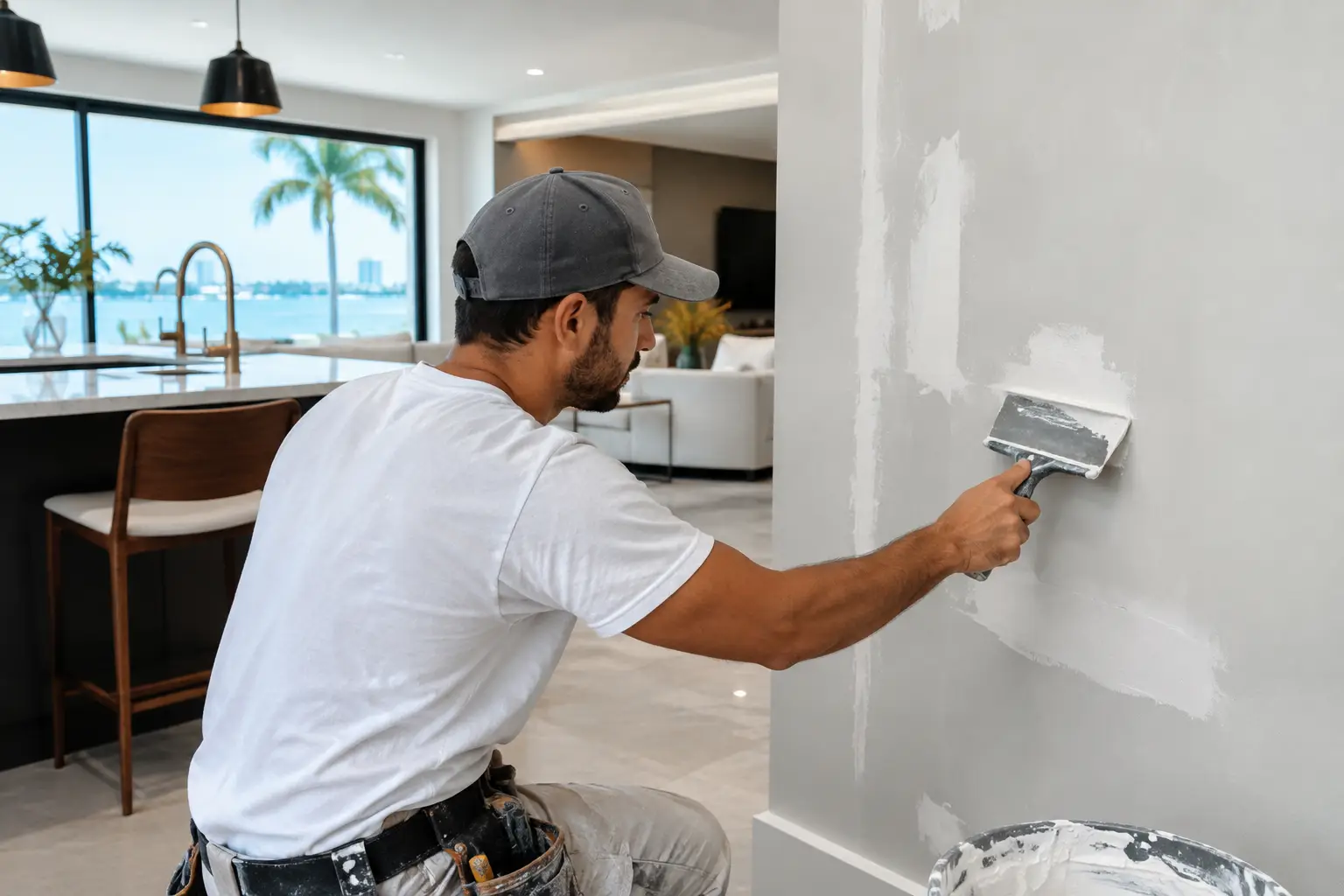
A dent behind a door and a soft, stained ceiling are both drywall problems, but they are not priced the same way. Drywall repair costs depend less on the fact that a wall is damaged and more on what caused it, how far it extends, and what it takes to return the surface to a clean, paint-ready finish.
For Miami homeowners, landlords, and property managers, moisture is often the deciding factor. A simple patch can stay simple. But if a plumbing leak, condensation issue, or storm-related water intrusion has affected the framing, insulation, or adjoining finishes, the repair needs a more careful scope before anyone closes the wall.
Typical Drywall Repair Costs by Scope
Small cosmetic repairs commonly fall at the lower end of the range. This includes nail pops, minor dents, small anchor holes, and cracks that have not spread through a large section of wall. The visible damage may be small, but proper preparation still matters: loose material must be removed, the patch needs support where necessary, joint compound must dry between coats, and sanding has to be controlled so the repair disappears under paint.
A small drywall patch may cost roughly $150 to $350 when it can be completed efficiently in one visit or as part of a larger painting, turnover, or punch-out scope. Minimum service charges can affect the final number, especially when the repair itself is only a few inches wide.
Medium repairs, such as a door-knob hole, a damaged corner, a cutout from electrical or plumbing access, or several wall patches in one room, often range from about $350 to $900. The total changes with the number of coats required, the condition of the surrounding drywall, texture matching, and whether the area needs priming and painting after the repair.
Larger repairs can run from $900 to several thousand dollars. These projects may involve removing water-damaged drywall, replacing insulation, treating affected materials as appropriate, installing new board, finishing multiple seams, and repainting a wall or entire room for a consistent result. Ceiling repairs often cost more than wall repairs because of access, containment, and the difficulty of blending the finish overhead.
These are planning ranges, not fixed prices. A site visit is the right way to confirm the scope, particularly when moisture, staining, sagging, or recurring cracks are involved.
What Raises Drywall Repair Costs
The largest cost driver is usually what sits behind the drywall. A clean impact hole is straightforward. A brown ceiling stain is a question mark until the moisture source has been identified and resolved. Closing a wet wall before the underlying issue is addressed can lead to staining, odor, deteriorated finishes, or another repair later.
In South Florida, humidity also matters. Bathrooms, laundry rooms, kitchens, exterior-facing walls, and areas near air-conditioning supply lines can show signs of condensation or moisture exposure. Depending on the location and condition of the wall, a repair may call for moisture-resistant drywall, appropriate joint materials, stain-blocking primer, or more extensive replacement rather than a surface patch.
Access changes pricing as well. A repair in an open living room is different from one above a stairwell, behind built-in cabinetry, inside a furnished occupied unit, or in a high-rise condo with restricted work hours. Protecting floors, furniture, elevators, and common areas takes time, but it is part of completing the project professionally.
Texture matching can be another variable. Smooth walls are unforgiving because even a slightly raised patch can show in angled light. Orange-peel texture, knockdown finishes, and older hand-applied textures require additional blending before paint. If the original texture has aged or been painted several times, a perfect spot match may be less practical than refinishing a larger wall section.
Why Painting Is Often Part of the Real Cost
Many property owners expect a drywall repair quote to include an invisible final result. That usually means paint work should be discussed separately or included clearly in the scope.
Fresh compound absorbs paint differently from an existing wall, so the repaired area should be primed before finish paint is applied. Even with the correct paint color, a small touch-up may flash under daylight or recessed lighting because the existing paint has faded, picked up wear, or has a different sheen. Painting from corner to corner, or repainting the full wall, often produces the cleaner finish.
For rental turnovers, coordinating drywall repairs with interior painting can be more efficient than scheduling separate visits. The same applies to baseboard replacement, trim touch-ups, and small flooring transitions affected by wall damage. Grouping related interior improvements can reduce disruption while giving the unit a more complete, move-in-ready appearance.
Condo Rules and Miami-Dade Project Planning
Condo repairs can look minor on paper and still require planning. Many buildings require proof of insurance, advance scheduling, elevator reservations, work-hour compliance, and protection for common areas. Some associations also require approval before work begins, particularly if the repair is tied to plumbing, electrical access, or a larger renovation.
Those building requirements do not necessarily make a drywall repair complicated, but they can affect the schedule and labor needed to complete it. Owners should check their association's rules early instead of waiting until the day materials arrive. For landlords and investors, this is especially useful between tenants, when a delayed approval can push back cleaning, painting, and leasing.
Permit requirements depend on what the project includes. Replacing a damaged section of drywall may be very different from work connected to relocating plumbing, modifying electrical systems, or addressing a larger interior renovation. In Miami-Dade, permit timing should be considered when the repair extends beyond cosmetic finishing. A clear scope helps determine the appropriate next step before walls are closed.
When a Patch Is Not the Best Choice
A patch makes sense when the surrounding drywall is dry, firm, and structurally sound. Replacement is usually the better value when the board is swollen, crumbly, sagging, repeatedly stained, or damaged across a broad area. Trying to save a few square feet of compromised material can create an uneven finish and a shorter-lived result.
Recurring cracks also deserve attention. Some are ordinary settling or seasonal movement, while others may be related to framing movement, door vibration, or prior repair work that lacked proper reinforcement. The right repair may require widening and reinforcing the crack, not simply covering it with compound.
In homes with concrete-block exterior walls, interior furring, and varying wall assemblies, the visible crack does not always tell the full story. An on-site assessment can distinguish between a finish issue and a condition that needs further investigation.
How to Get a More Accurate Estimate
Photos are useful for an initial conversation, especially if they show the full wall or ceiling, not just a close-up of the damage. Include a photo from several feet away, the approximate size, the room location, and any history of leaks or recurring stains. Mention whether the repair is in an occupied home, a condo, a rental unit, or a commercial interior space.
For the most accurate estimate, expect the scope to address the damaged drywall, preparation, protection, finishing, texture if needed, primer, and painting. Ask whether the quote covers a spot touch-up or repainting the full affected wall. That single detail can make a meaningful difference in both price and visual quality.
A well-planned repair protects more than a wall. It restores the polished backdrop for your furniture, flooring, trim, and the extraordinary living environment you want the room to reflect. If you are planning repairs as part of a turnover, remodel, or moisture-related interior update, request an estimate from JT Express Solutions before small damage becomes a more disruptive project.