Drywall Repair Miami for Cracks, Holes and Water Damage
By JT Express Solutions ·
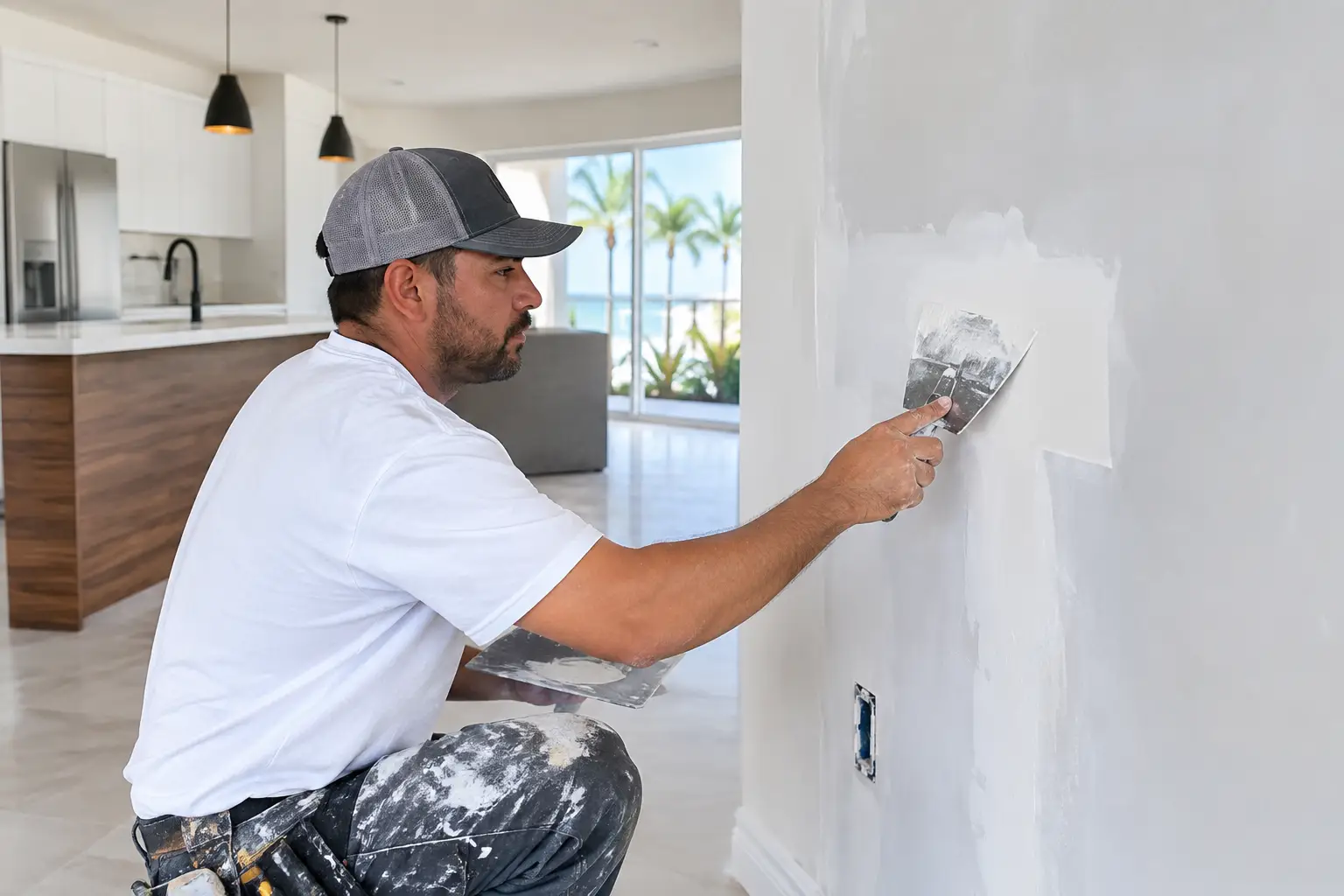
A wall can look nearly perfect until late-afternoon light reveals a raised seam, a spreading ceiling stain, or the outline of an old repair beneath fresh paint. In Miami homes, drywall repair is often about more than covering a blemish. It is about finding the reason behind the damage, restoring a clean surface, and making sure the repaired area blends with the room around it.
For homeowners, landlords, property managers, and investors, timely drywall work protects the appearance and usability of a property. A small hole from a move-out may be a straightforward repair. A soft ceiling, recurring crack, or brown water mark calls for a closer look before any finishing work begins.
When Drywall Damage Needs Professional Attention
Drywall is durable, but it is not designed to hide ongoing moisture, movement, or impact damage indefinitely. Miami's humidity, air-conditioning condensate lines, plumbing leaks, and busy rental turnovers all create situations where walls and ceilings may need attention.
Nail pops, hairline cracks, dents, and small anchor holes are common cosmetic issues. They can usually be corrected with proper patching, joint compound, sanding, texture matching, priming, and paint preparation. The quality of the finish matters here. A patch that is flat but poorly feathered can still show through once light hits the wall from an angle.
Water damage requires a different approach. Staining, bubbling paint, sagging drywall, or a musty odor can indicate that moisture has reached the material behind the finished surface. Painting over it may improve the appearance briefly, but it does not address the source. The affected area should be evaluated, the moisture issue corrected, and damaged drywall removed or repaired only after the area is dry and stable.
Larger cracks also deserve context. Some are limited to joint tape or normal settling, while others may relate to movement around doors, windows, or transitions between materials. The appropriate repair depends on the crack's location, width, condition, and whether it continues to return.
What Quality Drywall Repair in Miami Looks Like
A clean result starts with preparation, not the final coat of paint. The damaged section must be assessed to determine whether it can be patched or should be cut out and replaced. Loose material, failed tape, weakened drywall, and damaged corner bead should not be buried under layers of compound.
For holes and removed sections, a properly supported patch helps create a stable repair. Seams are then taped and built up in thin coats, with adequate drying time between applications. Rushing this stage can lead to visible edges, cracking, or uneven texture later.
The final surface should transition naturally into the surrounding wall or ceiling. This is especially important in open living areas, hallways, and rooms with smooth finishes, where side lighting exposes imperfections quickly. Orange peel, knockdown, skip trowel, and smooth-wall finishes each require a different touch. Matching an existing texture is often where experienced finishing work makes the greatest visual difference.
Primer is another detail that should not be skipped. Fresh joint compound absorbs paint differently than an existing painted wall. Priming the repaired area helps create even color and sheen, reducing the risk of a dull patch or flashing after painting.
Common Repairs for Homes, Rentals, and Workspaces
The scope of a drywall project can range from a single wall repair to a coordinated interior refresh. In occupied homes, the goal is often to restore a damaged wall with as little disruption as practical. For rentals and apartment turnovers, several smaller repairs may be addressed together before painting, flooring updates, trim work, or new fixtures are installed.
Common service needs include repairing door-handle holes, damaged corners, loose or cracked tape, ceiling stains after a resolved leak, removed wall-mounted accessories, and openings left by electrical or plumbing work. In kitchens and bathrooms, repairs may also be needed after cabinetry, backsplashes, vanities, or fixtures are replaced.
Commercial interiors and office spaces have their own considerations. Repairs may need to align with tenant schedules, phased improvements, or punch-out work before a space is handed back for use. Clear coordination helps prevent drywall finishing from delaying painting, baseboard installation, or final cleanup.
Why Water Damage Cannot Be Treated as a Paint Problem
A ceiling stain can be one of the most misleading drywall issues. Sometimes it is the mark left by an isolated, corrected leak. Other times, it is evidence of moisture that is still present above the ceiling. The same applies to soft drywall around a bathroom, kitchen, laundry area, or air-conditioning component.
Before repairing water-damaged drywall, the source should be identified and resolved by the appropriate professional. Once the area is dry, the repair team can determine whether surface treatment is sufficient or whether the affected drywall and insulation need removal. This sequence protects the new finish and avoids repeating the same work a few weeks or months later.
There is a trade-off between the smallest possible patch and a repair that creates a dependable, even surface. Cutting back to sound material may make the repair area larger, but it can produce a better long-term result than trying to preserve weakened drywall at the edges.
Planning a Drywall Repair Project
A useful estimate begins with clear information about the damage. Photos can help establish an initial scope, but an on-site review is often the best way to evaluate moisture concerns, wall texture, access, furniture protection, and whether adjacent areas require painting.
It also helps to decide the desired finish before work begins. If only the damaged spot will be painted, matching an older paint color and sheen can be challenging, particularly when the wall has faded from sunlight or has been touched up over time. Painting the full wall, or sometimes the connected room, can provide a more consistent result. That decision depends on the wall condition, budget, and how visible the repair location is.
For investment properties and turnovers, bundling drywall repairs with interior painting, baseboards, trim, flooring transitions, and punch-out items can make scheduling more efficient. The work can be organized around the condition of the unit instead of treating every small issue as a separate visit.
A Better Finish Supports the Entire Room
Drywall is the backdrop for nearly every interior improvement. New paint looks sharper on a properly prepared wall. Updated baseboards sit cleaner against a straight, finished surface. Kitchen and bathroom improvements feel more complete when patched openings, uneven seams, and damaged corners are handled with care.
JT Express Solutions Corp provides drywall repair and finishing as part of practical interior improvement work for qualified projects in Miami-Dade County. The focus is not simply on concealing damage, but on delivering a surface that is ready for the next stage of the room's transformation.
If you are seeing cracks, water staining, damaged corners, or old patches that no longer blend in, request an estimate before the problem spreads or a painting project begins. A well-planned repair can restore the quiet, finished look that makes a space feel cared for again.